Download PDF Man's Search for Meaning, by Viktor E. Frankl
While the other individuals in the shop, they are uncertain to discover this Man's Search For Meaning, By Viktor E. Frankl straight. It may need even more times to go shop by store. This is why we intend you this site. We will certainly offer the most effective way and also recommendation to obtain the book Man's Search For Meaning, By Viktor E. Frankl Also this is soft file book, it will certainly be ease to carry Man's Search For Meaning, By Viktor E. Frankl any place or conserve at home. The difference is that you might not require move the book Man's Search For Meaning, By Viktor E. Frankl location to area. You may need only copy to the other tools.
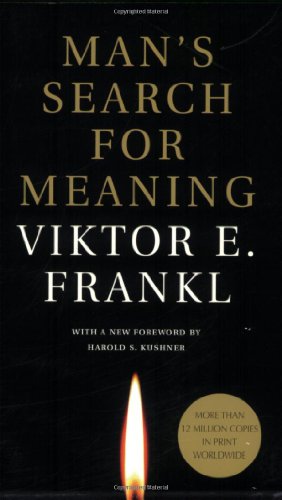
Man's Search for Meaning, by Viktor E. Frankl

Download PDF Man's Search for Meaning, by Viktor E. Frankl
Outstanding Man's Search For Meaning, By Viktor E. Frankl book is consistently being the most effective good friend for spending little time in your workplace, evening time, bus, and anywhere. It will certainly be a good way to simply look, open, and also read guide Man's Search For Meaning, By Viktor E. Frankl while in that time. As recognized, encounter as well as skill do not constantly had the much cash to acquire them. Reading this book with the title Man's Search For Meaning, By Viktor E. Frankl will certainly let you know a lot more things.
It can be among your morning readings Man's Search For Meaning, By Viktor E. Frankl This is a soft documents publication that can be survived downloading from on the internet publication. As understood, in this advanced age, modern technology will ease you in doing some tasks. Even it is merely reviewing the existence of publication soft documents of Man's Search For Meaning, By Viktor E. Frankl can be added function to open up. It is not only to open up and save in the device. This time around in the morning and also various other leisure time are to read the book Man's Search For Meaning, By Viktor E. Frankl
The book Man's Search For Meaning, By Viktor E. Frankl will certainly always make you positive worth if you do it well. Completing guide Man's Search For Meaning, By Viktor E. Frankl to check out will certainly not end up being the only goal. The goal is by obtaining the favorable worth from guide up until the end of guide. This is why; you have to find out even more while reading this Man's Search For Meaning, By Viktor E. Frankl This is not just just how quickly you review a book and also not just has how many you finished the books; it is about what you have actually acquired from guides.
Taking into consideration guide Man's Search For Meaning, By Viktor E. Frankl to read is also needed. You could pick guide based on the preferred themes that you like. It will certainly involve you to like checking out various other publications Man's Search For Meaning, By Viktor E. Frankl It can be also about the necessity that binds you to read the book. As this Man's Search For Meaning, By Viktor E. Frankl, you can find it as your reading book, even your favourite reading publication. So, locate your preferred book here and also obtain the connect to download guide soft documents.
With a new Foreword by Harold S. Kushner
and a new Biographical Afterword by William J. Winslade
Psychiatrist Viktor Frankl's memoir has riveted generations of readers with its descriptions of life in Nazi death camps and its lessons for spiritual survival. Between 1942 and 1945 Frankl labored in four different camps, including Auschwitz, while his parents, brother, and pregnant wife perished. Based on his own experience and the experiences of others he treated later in his practice, Frankl argues that we cannot avoid suffering but we can choose how to cope with it, find meaning in it, and move forward with renewed purpose. Frankl's theory-known as logotherapy, from the Greek word logos ("meaning")-holds that our primary drive in life is not pleasure, as Freud maintained, but the discovery and pursuit of what we personally find meaningful.
At the time of Frankl's death in 1997, Man's Search for Meaning had sold more than 10 million copies in twenty-four languages. A 1991 reader survey for the Library of Congress that asked readers to name a "book that made a difference in your life" found Man's Search for Meaning among the ten most influential books in America.
Beacon Press, the original English-language publisher of Man's Search for Meaning, is issuing this new paperback edition with a new Foreword, biographical Afterword, jacket, price, and classroom materials to reach new generations of readers.
- Sales Rank: #155 in Books
- Brand: Beacon Press
- Published on: 2006-06-01
- Released on: 2006-06-01
- Original language: English
- Number of items: 1
- Dimensions: 6.80" h x .50" w x 4.20" l, .21 pounds
- Binding: Mass Market Paperback
- 184 pages
Features
Review
One of the great books of our time. —Harold S. Kushner, author of When Bad Things Happen to Good People
"One of the outstanding contributions to psychological thought in the last fifty years."—Carl R. Rogers (1959)
"An enduring work of survival literature." —New York Times
"An accessible edition of the enduring classic. The spiritual account of the Holocaust and the description of logotherapy meets generations' need for hope."—Donna O. Dziedzic (PLA) AAUP Best of the Best Program
About the Author
Viktor E. Frankl was professor of neurology and psychiatry at the University of Vienna Medical School until his death in 1997. His twenty-nine books have been translated into twenty-one languages. During World War II, he spent three years in Auschwitz, Dachau, and other concentration camps.
Harold S. Kushner is rabbi emeritus at Temple Israel in Natick, Massachusetts, and the author of bestselling books including When Bad Things Happen to Good People, Living a Life That Matters, and When All You’ve Ever Wanted Isn’t Enough.
William J. Winslade is a philosopher, lawyer, and psychoanalyst who teaches psychiatry, medical ethics, and medical jurisprudence at the University of Texas Medical School in Galveston.
Most helpful customer reviews
184 of 191 people found the following review helpful.
a "why" to live...
By Cipriano
An American doctor once asked Viktor Frankl to explain the difference between conventional psychoanalysis and logotherapy. Before answering, Frankl asked the doctor for his definition of psychoanalysis. The man said, "During psychoanalysis, the patient must lie down on a couch and tell you things which sometimes are very disagreeable to tell." Frankl immediately replied by saying: "Now, in logotherapy the patient may remain sitting erect but he must hear things which sometimes are very disagreeable to hear." By this he meant that in logotherapy the patient is actually confronted with and reoriented toward the MEANING of his life. The role of the therapist, then, is to help the patient discover a purposefulness in his life. Frankl's theory is that man's search for meaning is the primary motivation in his life and not a "secondary rationalization" of instinctual drives. Whereas Freudian psychoanalysis focuses on the "will to pleasure" and Adlerian psychology focuses on the "will to power" it can be said that Frankl's logotherapy focuses on the "will to meaning." Does man give in to to conditions or stand up to them? According to Frankl, the strength of a person's sense of meaning, responsibility, and purpose is the greatest determining factor in how that question will be answered. He believed that "man is ultimately self-determining" and as such, "does not simply exist but always decides what his existence will be, what he will become in the next moment."
The first (and largest) section of this book is the searing autobiographical account of the author's experience as a longtime prisoner in a concentration camp. These camps claimed the lives of his father, mother, brother, and wife. Frankl's survival and the subsequent miracle of this book are a testimony to man's capacity to rise above his outward fate. As Gordon W. Allport states in the preface, "A psychiatrist who personally has faced such extremity is a psychiatrist worth listening to."
I agree, and highly reccommend this book. As the sub-title says, it is an "introduction" to logotherapy, and anyone who wants to go deeper into the principles and practical application of Frankl's existential psychiatry should go to his excellent "The Doctor And The Soul".
Frankl was fond of quoting Nietzsche's dictum..."He who has a WHY to live can bear with almost any HOW."
551 of 586 people found the following review helpful.
This book could change your life
By Mr Mondo
Dr. Frankl's logotherapy is straightforward and easy to understand. It is also a useful antidote to the rather frightening drift in psychology during the past two decades toward strict biological determinism.
This particular work is one I keep at hand and re-read on a regular basis. I read it for the first time a few months after I started medical treatment and therapy for life-long depression. I get more from it each time I go back to it.
Logotherapy manages an incredible balance. It does not put man himself at the center of the universe, thus avoiding the kind of narcissistic self-reflection common to much of the therapeutic literature today. Yet, it does not sweep man aside as irrelevant. Instead, Frankl argues that we have an incredible power to shape our attitudes and responses to the challenges life presents us and that we inevitably grow thanks to these challenges.
This is a quick read and could conceivably change your life. Man is more than the sum of his biology and his environment. We inevitably choose to be who we are. Frankl's argument is that, if we choose wisely, we can triumph even in tragedy. It's a truth many of us have lost sight of in our cynicism.
232 of 245 people found the following review helpful.
"He who has a 'why' to live for can bear with almost any 'how'."--Nietzsche
By Owen Hatteras
This book was read many years ago at a time when this reviewer felt nearly crushed under the weight of family and personal troubles. It is not light and diverting reading; indeed, in part it is terrifying. Yet the memory of it has persisted across all these years.
A prominent psychiatrist in pre-World War II Vienna, Doctor Frankl found himself suddenly stripped of all money, possessions, position, respect, and ultimately, his family--including his pregnant and beloved wife. After confinement in some of the smaller concentration camps, he ultimately arrived at Auschwitz--the lowest circle of the man-made Hell that was the system of concentration and extermination camps (in German, 'Konzentrationslager' and 'Vernichtungslager'). There, his medical skills were not employed until nearly the end of the war. Instead, he was employed at hard labor just like the rest of the men in his prison block who were marched every day to their work site before dawn and marched back late at night.
The most striking thing about Frankl's account of his imprisonment (to me at least) was not the backbreaking work, the all-pervading fear, nor even the constant, maddening hunger; but the unrelenting degradation of the prisoners in order to get them to accept the Nazi's judgment of them as sub-human. For example, when carrying heavy tanks filled with human sewage for disposal, almost inevitably some would splash prisoners full in the face. Any move to wipe one's face, or even show instinctive grimaces of disgust would be punished by the Capos (trusted prisoners, chosen mostly for their brutality) with a prompt beating from a club or whip. Because of this, the normal reactions of prisoners to being befouled were soon suppressed. Every attempt possible was made to degrade the prisoners by the (frequently delighted) SS guards and the Capos. Subjected to this treatment, some prisoners gave up hope and committed suicide by running into the inner electric fence that encircled the camp. Others would lie motionless in their bunks in their own waste--ignoring pleas to get up from fellow prisoners, and blows from guards alike--smoking up all of the cigarettes they might have been saving for barter.
Faced with this, Frankl combated this potential demoralization in himself and others by leading the prisoners back to their own humanity. "Every freedom may be taken away from a man but one; the freedom to choose what attitude he will take towards his conditions." Despite every attempt to rob them of human dignity, prisoners still had a choice. Would they take an attitude of 'I die tomorrow; you die today' and behave as starving beasts--stealing other prisoner's food, for example; or would they show that they were neither animals nor things, but human beings? Some Amazon reviews of an earlier edition of this book seemed to imply that Frankl had judged those who despaired and died to be weak, or that he was somehow 'better' than they for having survived. Those reviewers can only have done this by forgetting what they had read. Frankl instead writes with sorrow that "the best of us did not survive", warmly remembering comrades who ended their days offering comfort and sometimes their last bit of bread to fellow prisoners.
We live in an age when the feeling that one's life is meaningless is rampant even compared to the recent past. Many compensate by drowning themselves in their career; working fourteen hour days, always gabbing into their cell phone, and carrying their laptop everywhere so they can do some work even in what would be an idle moment. Others escape into escapist and/or authoritarian religion, gladly handing over the miserable burden of their freedom and the need to find meaning to someone else. (Frankl--an observant Jew throughout his life--was not anti-religious I should point out. He writes that a therapist's attempts to debunk genuine religious or spiritual views are an unethical attempt to force the therapist's views on a client.) Still others use alcohol and/or drugs (including perfectly legal drugs)as a response to a sense of life's meaninglessness or futility.
Frankl writes that our struggle--even our despair--over finding meaning in our lives is not an psychiatric illness, or even a precursor to one. Potential readers of this book will not find "The Meaning of Life". What they will find is the story of a man who was compelled to develop the tools to find his own meaning, his 'why'--at a time when his life depended on it in a way seldom seen in life and history. Hopefully, these tools will benefit others as they have benefited me. As someone wrote of Ralph Waldo Emerson, "He did not try to lead others to himself, but to themselves."
See all 3145 customer reviews...
Man's Search for Meaning, by Viktor E. Frankl PDF
Man's Search for Meaning, by Viktor E. Frankl EPub
Man's Search for Meaning, by Viktor E. Frankl Doc
Man's Search for Meaning, by Viktor E. Frankl iBooks
Man's Search for Meaning, by Viktor E. Frankl rtf
Man's Search for Meaning, by Viktor E. Frankl Mobipocket
Man's Search for Meaning, by Viktor E. Frankl Kindle
Man's Search for Meaning, by Viktor E. Frankl PDF
Man's Search for Meaning, by Viktor E. Frankl PDF
Man's Search for Meaning, by Viktor E. Frankl PDF
Man's Search for Meaning, by Viktor E. Frankl PDF